
Unveiling the Truth Behind AWS Savings Plans: Cost Savings or Hidden Constraints?
 CloudPilot AICloudPilot AIPublishedMay 12, 2025Read4 min
In the realm of cloud computing, AWS Savings Plans are often touted as a comprehensive solution for AWS cost optimization. Introduced by Amazon Web Services in November 2019, these plans promise significant discounts compared to on-demand pricing, aiming to reduce computing costs for users.
However, a deeper examination reveals that relying solely on AWS Savings Plans might not always lead to the anticipated savings and could introduce certain limitations.
Understanding AWS Savings Plans
AWS Savings Plans offer a flexible pricing model that provides up to 72% savings compared to on-demand pricing. By committing to a consistent amount of usage (measured in $/hour) for a 1- or 3- year term, businesses can unlock substantial discounts across various AWS services.
Types of AWS Savings Plans
-
Compute Savings Plans: These plans offer the most flexibility, applying to any EC2 instance regardless of region, instance family, operating system, or tenancy. They also extend to AWS Fargate and AWS Lambda usage, making them ideal for dynamic workloads.
-
EC2 Instance Savings Plans: Tailored for specific instance families within a region, these plans provide the highest discount rates, up to 72%. They are suitable for predictable workloads with consistent usage patterns.
Potential Pitfalls of AWS Savings Plans
While AWS Savings Plans are designed to aid in AWS cost optimization, they come with certain caveats:
- Commitment Risks: Committing to a fixed usage level for 1 or 3 years can be risky if your organization's needs change, potentially leading to underutilization and wasted expenditure.
- Limited Flexibility: Although more flexible than Reserved Instances, Savings Plans still require adherence to specific usage patterns to maximize benefits.
- Complexity in Management: Effectively managing and monitoring Savings Plans necessitates a thorough understanding of AWS billing and usage patterns, which can be complex and time-consuming.
The Hidden Costs of Savings Plans
Though AWS Savings Plans offer pricing flexibility across instance types and services (including EC2, Fargate, and Lambda), they still require a fixed hourly spend. This commitment model can result in unnecessary costs and limit your architectural agility in several ways:
1. You Pay for What You Don't Use
If your actual usage drops below your committed hourly spend—due to scaling down, seasonal demand, or architectural changes—you still pay the full rate. In fast-changing environments, this often results in overpayment and wasted budget.
2. Reduced Flexibility for Evolving Architectures
As organizations modernize their infrastructure—shifting to Kubernetes, containers, serverless, or adopting spot instances for cost optimization—usage patterns become more dynamic and harder to predict.
Savings Plans, by contrast, assume consistent usage. This mismatch can result in underutilized commitments and wasted spend, particularly during architectural transitions.
3. Expensive Charges Outside the Plan
Savings Plans only apply to specific instance families, regions, or compute types, depending on the plan you choose. Any usage outside the committed scope is billed at the full On-Demand rate—often the most expensive pricing tier.
If your workloads deviate from the original assumptions, you risk incurring high, unexpected charges that negate your savings.
Strategies for Effective AWS Cost Optimization
To truly harness the benefits of AWS Savings Plans, consider the following strategies:
- Regular Monitoring: Utilize AWS Cost Explorer to track usage and ensure that your Savings Plans align with actual consumption.
- Diversify Cost Optimization Tools: Don't rely solely on Savings Plans; explore other AWS cost optimization tools and practices to achieve comprehensive savings.
- Flexible Planning: Anticipate potential changes in workload and usage patterns to adjust commitments accordingly.
CloudPilot AI: Flexible, Intelligent AWS Cost Optimization
At CloudPilot AI, we help teams unlock the full potential of the cloud without long-term lock-in. With our platform, you will have:
- 45-minute spot interruption prediction for proactive, disruption-free workload autoscaling.
- Predictive algorithms that reduce spot instance interruptions by up to 90%, enhancing reliability.
- Intelligent instance selection across pricing models, availability zones, and instance types for optimal performance and cost.
- Real-time, commitment-free cost optimization that automatically adjusts to changing workload demands.
With CloudPilot AI, you get the elasticity of Spot, the reliability of On-Demand, and the intelligence to balance both—without the constraints of a Savings Plan.
Conclusion
AWS Savings Plans can be valuable in specific use cases, but they are not a one-size-fits-all solution. It's crucial to approach them with a clear understanding of their limitations and to integrate them into a broader, more flexible cost management plan. By doing so, businesses can avoid potential pitfalls and truly capitalize on the savings opportunities AWS offers.
Related articles

Hands-On with MCP Server: Simplifying AWS Cloud Cost Analysis
A cost analysis MCP Server simplifies the process of analyzing AWS bills and delivers actionable insights.
CloudPilot AI·4 min
CloudPilot AI Is Now Available on Google Cloud Marketplace
GKE teams can now subscribe to CloudPilot AI through Google Cloud Marketplace with the billing account they already use: one Google Cloud invoice, usage-based pricing, and no separate contract to negotiate.
CloudPilot AI·3 min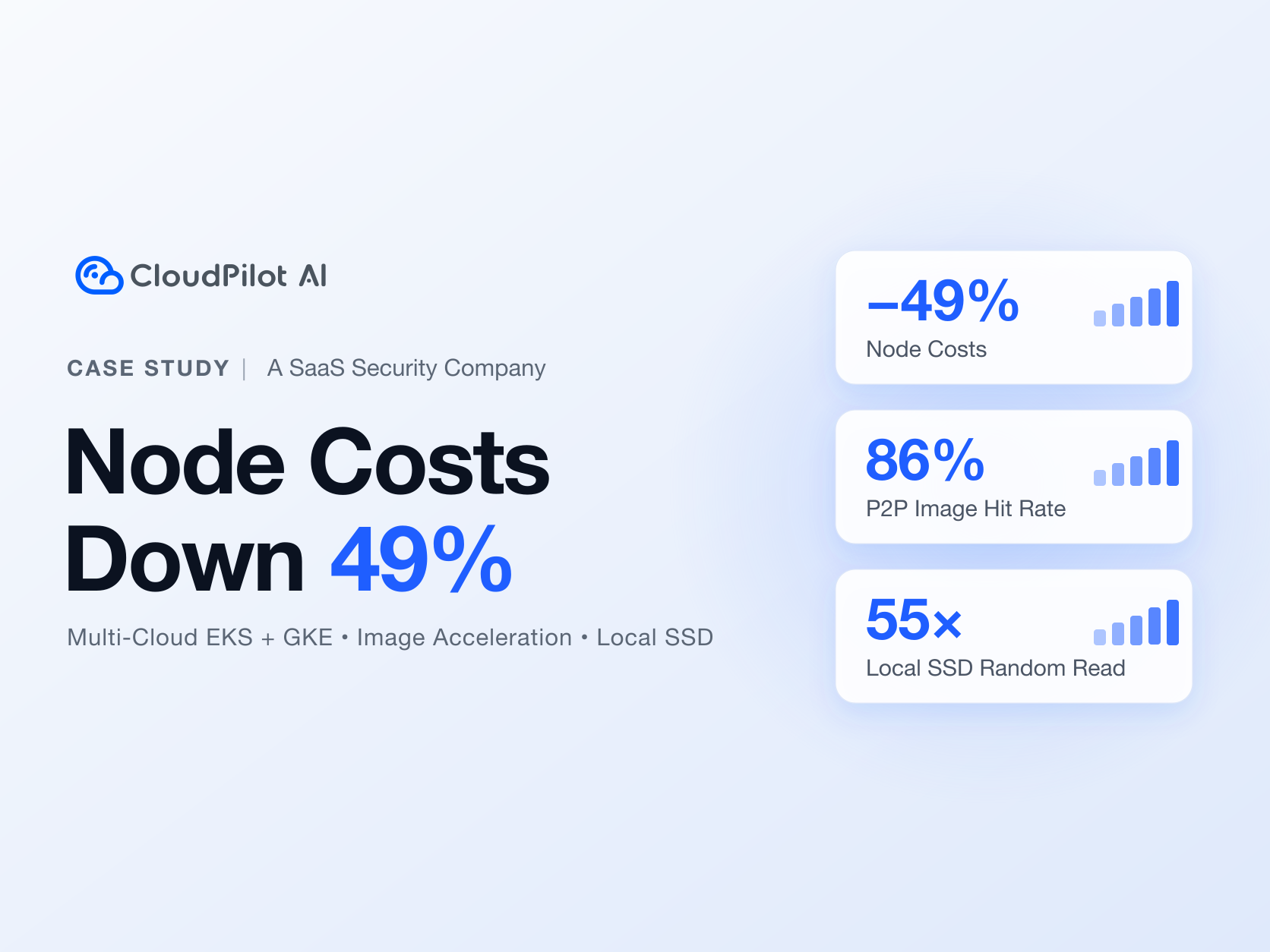
A SaaS Security Company Cuts Cloud Costs by 49% and Streamlines Multi-Cloud Kubernetes Operations with CloudPilot AI
Running six EKS and GKE clusters, a SaaS security company cut node costs by 49% in its featured cluster and brought workload right-sizing, P2P image acceleration, Local SSD ephemeral storage, and workload placement onto one platform with CloudPilot AI.
CloudPilot AI·13 minThe Kubernetes Autoscaling Brief
Once a month: what we see in the Spot market, one real cluster torn down, and what shipped.
No spam. Unsubscribe anytime.