
120 Days and 8 Hours on AWS Spot
 CloudPilot AIEngineering TeamPublishedNov 4, 2026Read1 min
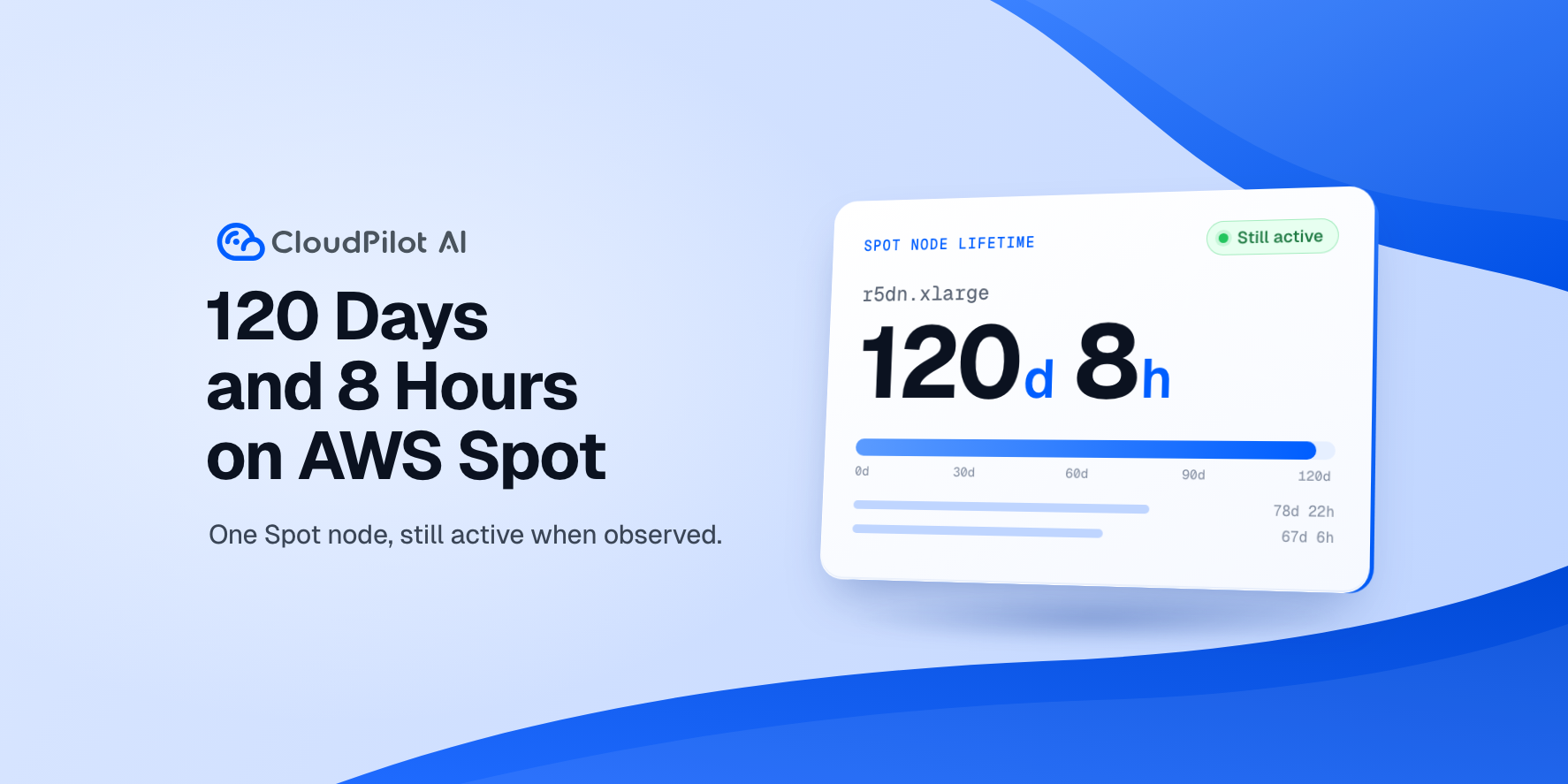
An AWS Spot node running for more than four months—and still active at the time of observation.

In a recent snapshot of nodes managed by CloudPilot AI, the longest observed AWS Spot node lifetime reached 120 days and 8 hours.
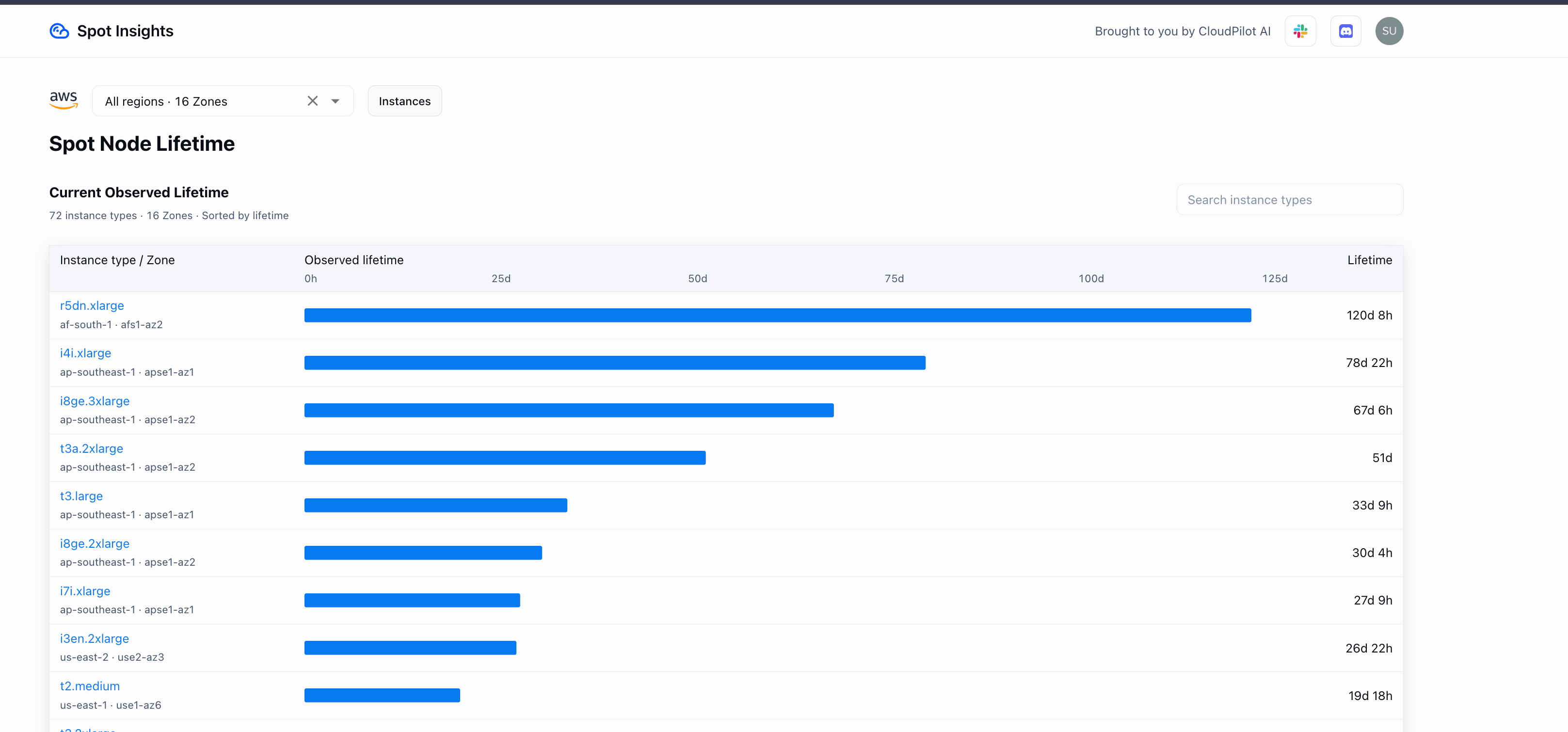
For Kubernetes teams, long-lived Spot capacity can mean fewer node replacements and less operational disruption, alongside lower compute costs.
Connect your cluster. Let CloudPilot AI handle the optimization.
CloudPilot AI automates ongoing compute optimization around your workload requirements, helping you capture Spot savings while maintaining application availability. Your team spends less time managing capacity and more time building products.
The goal is simple: lower cluster costs, reliable workloads, and less manual work. The 120-day observation is one example of long-lived Spot capacity in a managed cluster; individual node lifetimes will vary.
Explore current observations in Spot Insight, or get started with CloudPilot AI.
Run efficiently. Operate confidently.
Related articles

AWS Cost Optimization with Spot Instances: The Ultimate Guide to Saving Big
Learn how to maximize cost savings on AWS by leveraging Spot Instances effectively. Follow this comprehensive guide for expert tips and strategies.
CloudPilot AIMar 5, 20255 min
Memory Extension in Practice: Reducing OOM Risk During Memory Spikes
EKS tests show how CloudPilot AI Memory Extension can absorb memory spikes, when swap increases request latency, and how to configure NodeClass and NodePool.
CloudPilot AINov 4, 202610 min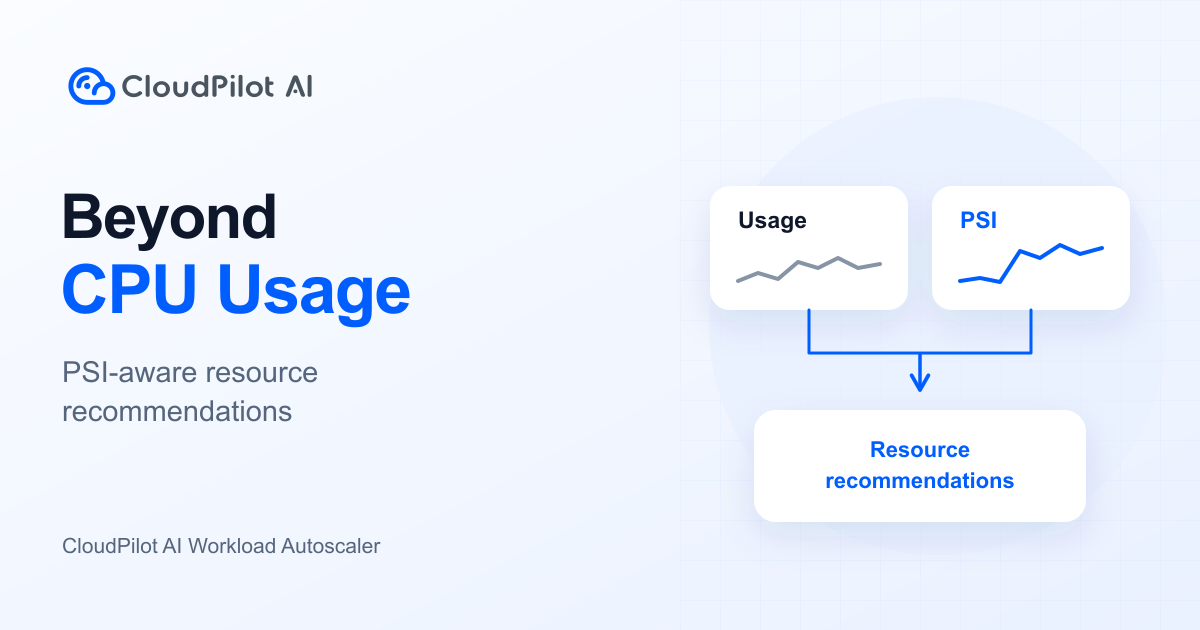
CPU Usage Looks Low. Why Is Your Application Still Slow?
CPU usage shows consumption, not waiting. Learn how CloudPilot AI Workload Autoscaler combines usage, PSI, and resource policies to right-size workloads.
CloudPilot AIOct 30, 20267 minThe Kubernetes Autoscaling Brief
Once a month: what we see in the Spot market, one real cluster torn down, and what shipped.
No spam. Unsubscribe anytime.