
Introducing CloudPilot AI: Your SRE Agent Inside Kubernetes
In the era of GenAI, infrastructure isn't just a cost center but a foundation that determines how fast you can innovate. Every CPU cycle and GPU minute matters, and overprovisioned resources are more than waste; they're lost opportunities to deliver value.
Yet managing Kubernetes clusters at scale remains a balancing act. As services multiply and workloads diversify, ensuring optimal resource utilization becomes increasingly complex. Traditional tools offer fragmented insights, leaving SREs and platform engineers to juggle inefficiencies, unexpected costs, and constant firefighting.
But what if your Kubernetes clusters could manage themselves?
With the latest release of CloudPilot AI, we're not just introducing a new dashboard, but redefining the SRE experience. CloudPilot AI now acts as an autonomous SRE Agent embedded directly within your Kubernetes clusters, continuously optimizing resources, reducing cloud waste, and enhancing application performance — all without manual intervention.
One View, Every Insight
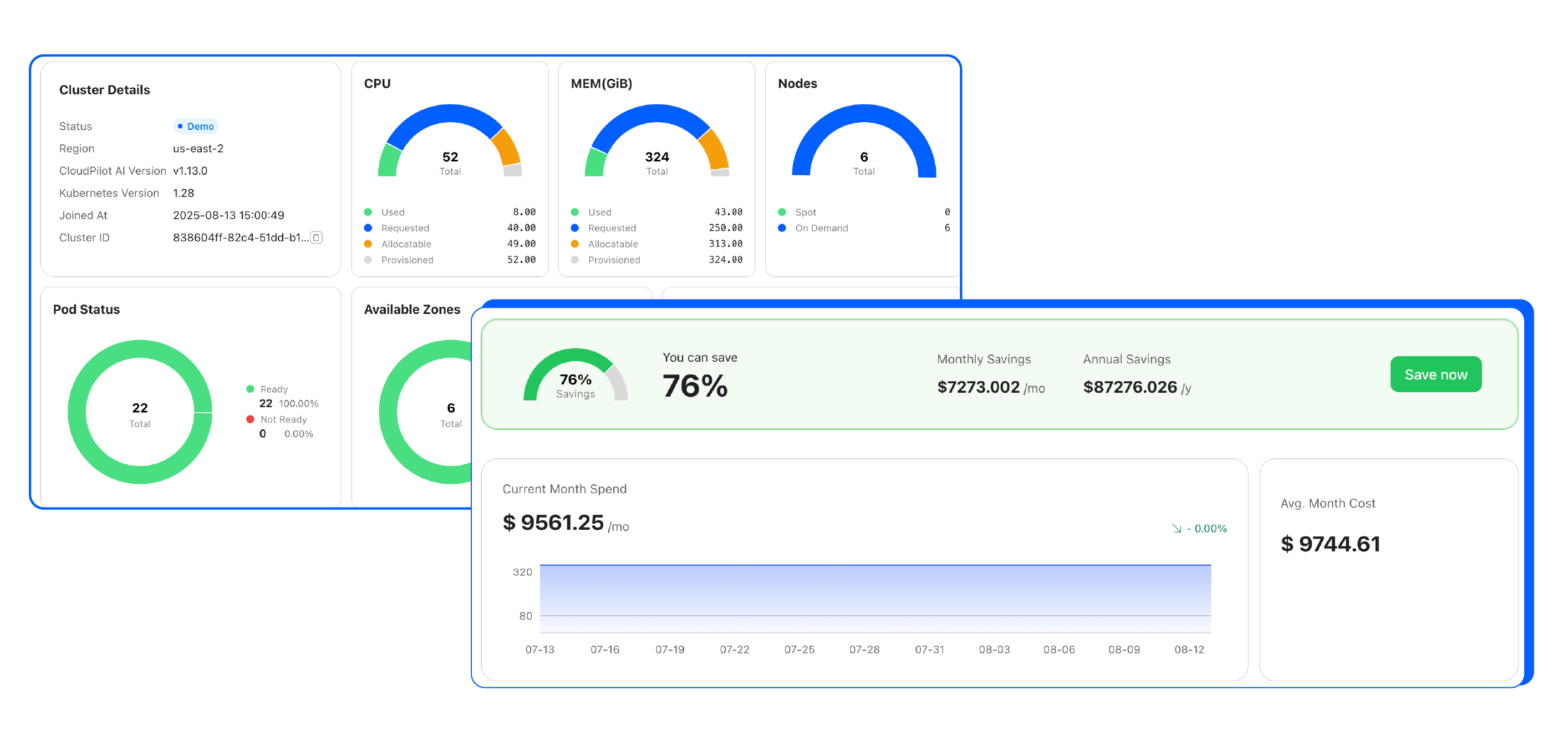
No more jumping between tools to understand your clusters. The redesigned CloudPilot AI dashboard delivers a unified view of CPU, memory, and node usage across all environments. Cloud spend is aggregated in one place, giving you instant visibility into the financial footprint of your infrastructure.
This intuitive interface empowers your team to make informed decisions swiftly. Every metric, every insight, and every cost trend is right where you need it, so decisions happen faster and with more confidence.
Autonomous Optimization: The Future of Infrastructure Management
CloudPilot AI doesn't just observe your clusters; it actively manages them. Leveraging advanced algorithms, it autonomously rebalances workloads, rightsizes resources, and predicts scaling needs. This continuous optimization ensures your infrastructure adapts in real-time to changing demands, minimizing waste and maximizing efficiency.
Total Clarity, Fine-Grained Control
Automation doesn't mean giving up control. CloudPilot AI gives you complete control over how resources are provisioned and managed. You can configure workloads with replica counts, spot-friendliness, and rebalance settings, while node pools and node classes allow precise specification of CPU, memory, disk, instance family, architecture, and capacity.
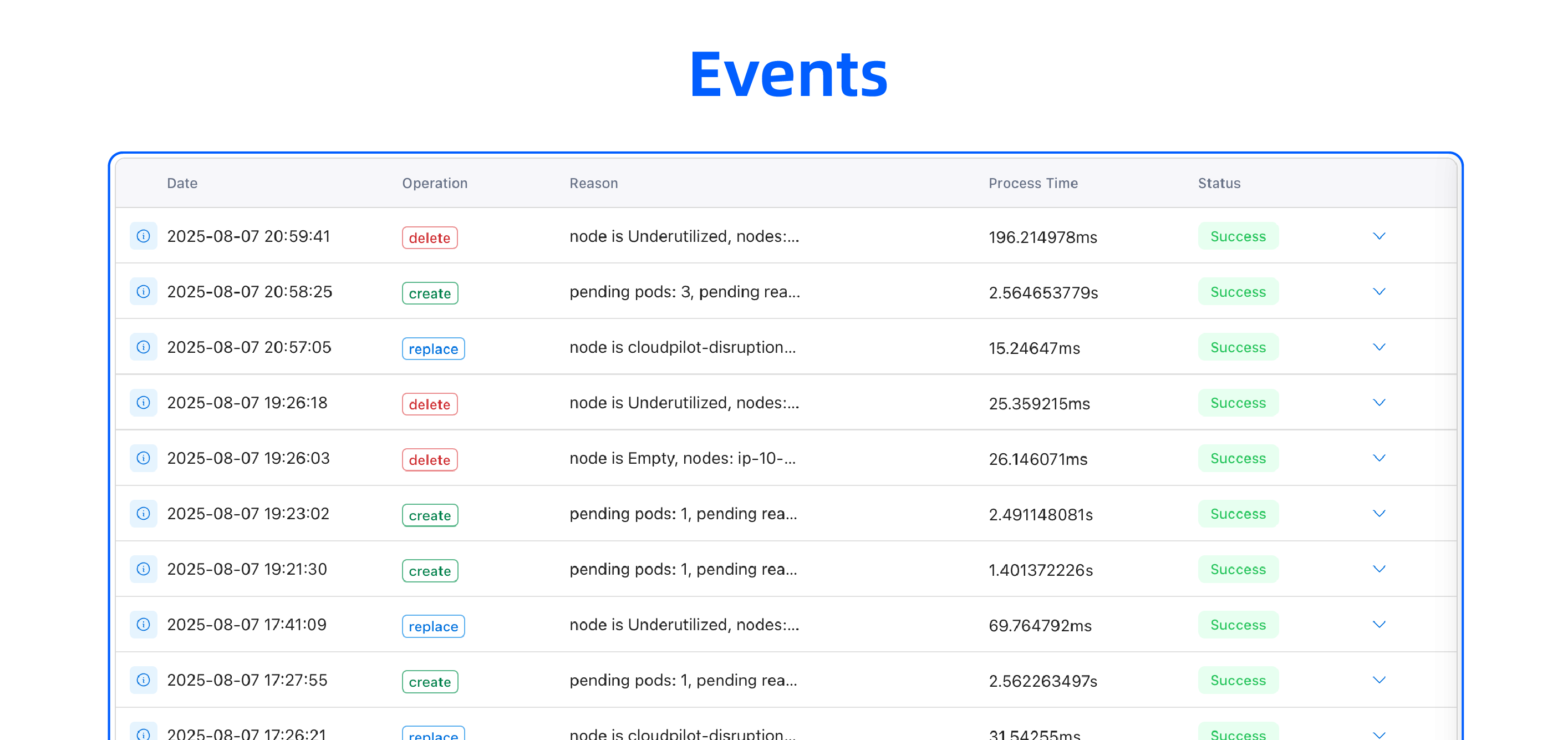
At the same time, CloudPilot AI keeps you fully informed with detailed node-level event logs from Karpenter, including create, delete, and replace operations. Each event comes with status, reason, and raw data, so you can pinpoint issues quickly and trust every decision your automation makes.
From Tool to Teammate
CloudPilot AI has always been built for automation, but now the way you interact with that automation is transformed. CloudPilot AI is your SRE Agent, which is inside your cluster, watching, optimizing, and protecting, so you can focus on innovation instead of orchestration.
Experience the future of infrastructure today and let CloudPilot AI be your trusted SRE teammate.
Related articles
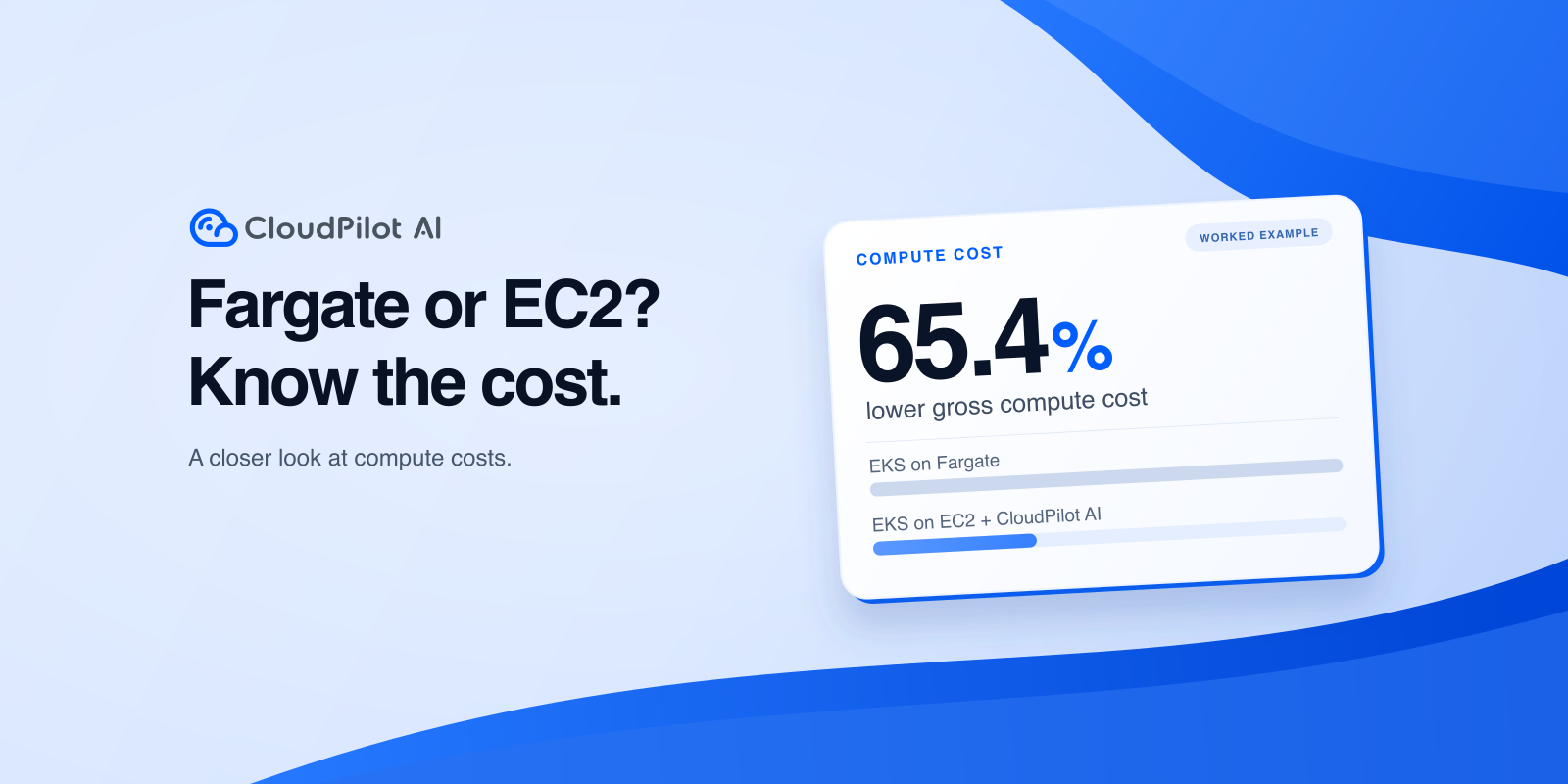
AWS Fargate vs EC2 for EKS: Which Is Cheaper?
Compare EKS on Fargate and EC2 billing, CPU requests and limits, and a worked cost example to decide whether EKS + CloudPilot AI fits your services.
 CloudPilot AINov 9, 20269 min
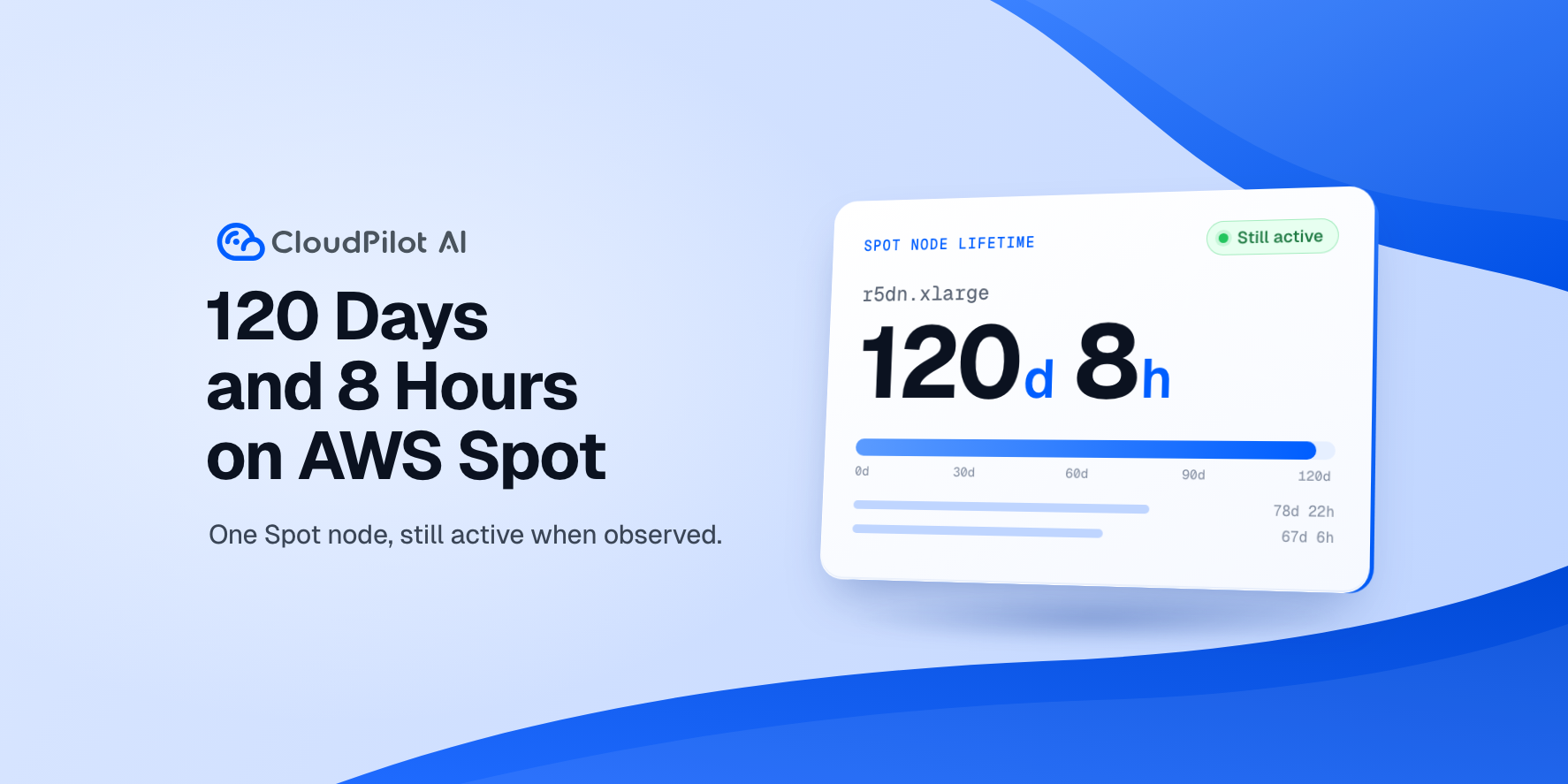
120 Days and 8 Hours on AWS Spot
Long-lived AWS Spot capacity can mean fewer node replacements and less operational disruption. See how CloudPilot AI approaches ongoing compute optimization.
CloudPilot AINov 4, 20261 min
Memory Extension in Practice: Reducing OOM Risk During Memory Spikes
EKS tests show how CloudPilot AI Memory Extension can absorb memory spikes, when swap increases request latency, and how to configure NodeClass and NodePool.
CloudPilot AINov 4, 202610 minThe Kubernetes Autoscaling Brief
Once a month: what we see in the Spot market, one real cluster torn down, and what shipped.
No spam. Unsubscribe anytime.